The Company That Sells Time Machines Built One for Itself
Globally distributed; offices across
North America
UK
Australia
- Soundproof modular rooms
- Phone booths
- Modular office infrastructure
“We sell time machines.”
The average office worker loses 23 minutes of focus to every interruption. Across a typical year, that adds up to hundreds of lost hours. Roughly $12,000 per employee in lost productivity. Every year.
But what if you could get that time back?
That's the idea behind what Scot Sustad, co-founder and Head of Product at Bureau, calls a Time Machine.
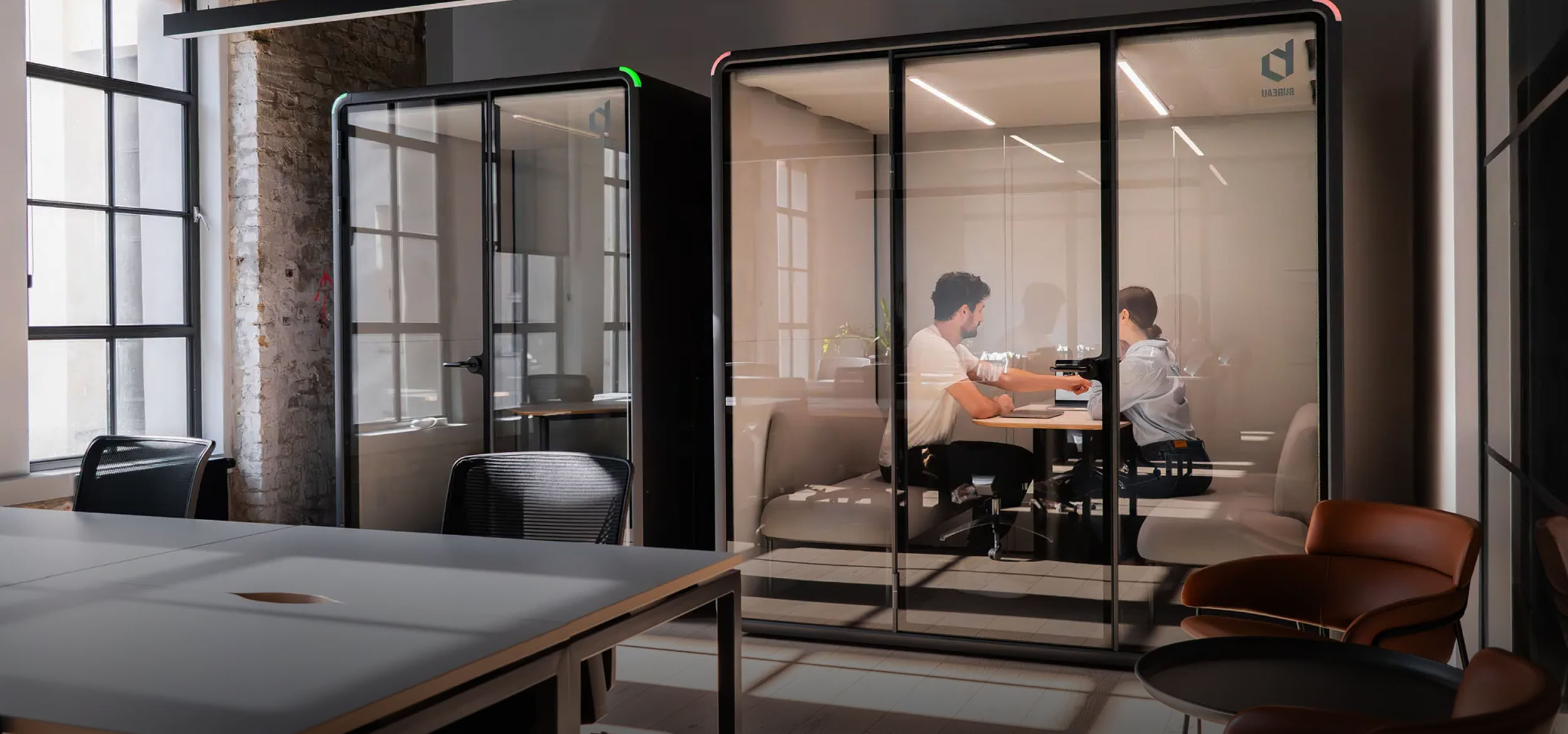
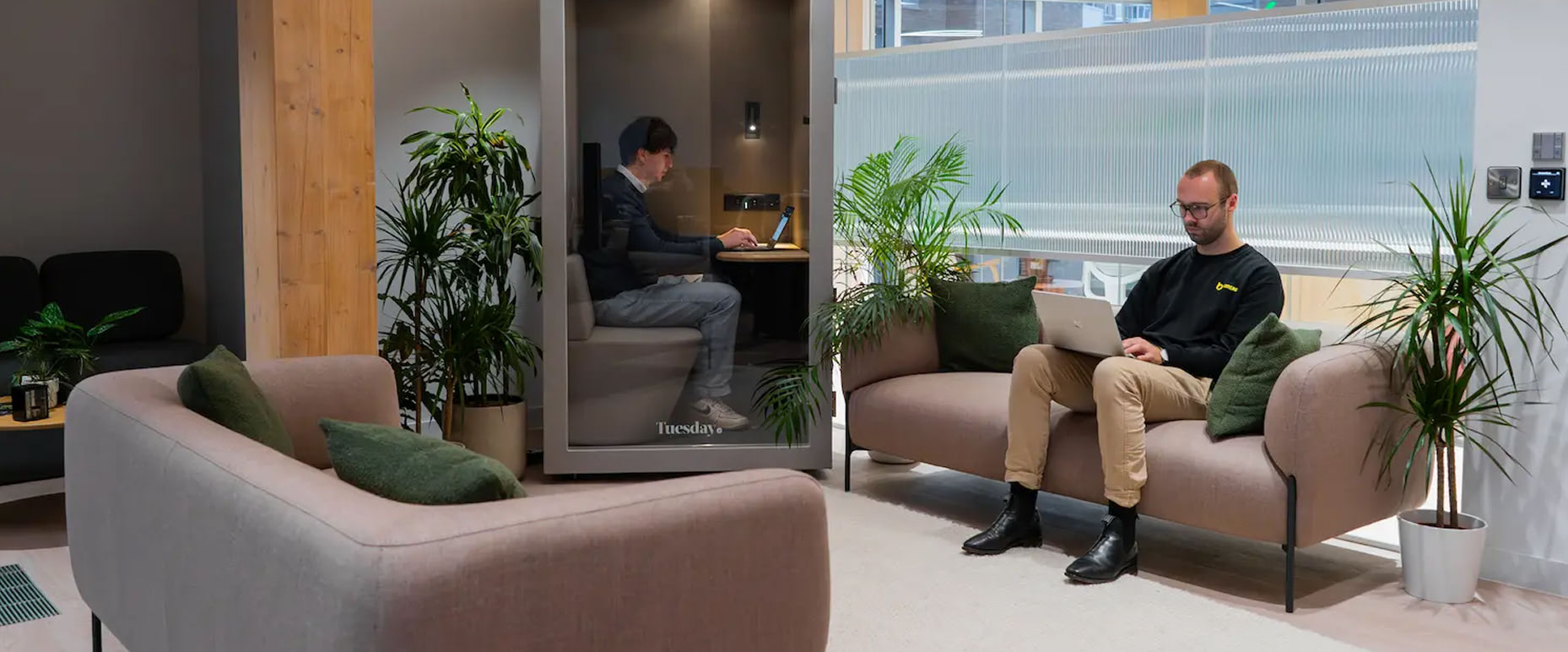
A Time Machine, in Scot's framing, is any one of Bureau's soundproof booths. Step inside. Close the door. The noise stops. The interruptions stop. The hour you thought you'd lost is suddenly yours again. "We sell time machines," he says, and once you sit with the numbers, the line stops sounding cheeky.
Bureau is a speed company in a second sense, too. Their pitch to office managers and ops leaders is that a soundproof, beautiful, branded workspace can be installed in their office in two weeks. Not the several months a traditional fit-out demands. "The permanent is past," Scot likes to say. "The future is flexible."
There was just one problem with selling time. The team that helped clients see what they were buying, Bureau's design services group, didn't have a Time Machine of its own.
The Challenge
A Speed Company With a Slow Visualization Workflow
Bureau's design services team is small, distributed, and indispensable. Designers in Argentina, Mexico, and Nigeria work alongside a sales team spread across Vancouver, Toronto, New York, Dallas, London, and three Australian offices. Together they support clients ranging from one and two-person agencies all the way up to NASA, SpaceX, and WeWork (with whom Bureau is now the chosen partner for phone booths globally).
When a client wanted to see what a Bureau phone booth would actually look like in their space (a custom color, branded panels, a specific configuration, dropped into a photo of their actual office), the design services team made it happen. But making it happen took a stack of tools. Adobe to clean up the client's reference photo. Blender to build the 3D scene. AutoCAD to align the layouts. Manual scaling, manual back-and-forth, manual everything.
The results were great. The speed wasn't.
"For some presentations where we have to show multiple options or designs, it could take 24 hours," says Fernando Canteli, Bureau's design services manager. For a single render with a client's product placed in their photo, the team could spend an hour just cleaning up the source image and getting the proportions right.
For a company whose entire promise to customers is we move at the speed you need, that mismatch was a real problem. And it was getting more expensive to ignore. As Scot puts it, every design services request "actually costs $300 internally," a number the company had been working hard to bring down without sacrificing quality.
Bureau had tried to solve this before. They'd spent months and tens of thousands of dollars onboarding a different visualization tool that ultimately didn't deliver. They'd experimented with general-purpose AI image tools and hit a wall every time. "I can get most of what I want done in code," Scot says, "but when it comes down to I want a presentation and I need this booth looking like this, that's when I'm super frustrated. You aren't listening to me. Why is this so complicated?"
They wanted a tool that understood their product, understood spatial dimension, and was fast enough to keep up with their sales process. A Time Machine for the design team.
The Fit
Why Bureau Chose Motif
A few things made Motif the answer.
It was built for architecture, not just images. General AI image tools could produce something that looked like a phone booth in a room, but the output was plausible at a glance rather than reliable. Motif's AI is purpose-built for architectural visualization, and the platform supports importing a firm's real product models directly into the workspace. The result: when the team places a booth into a scene, they're working from the actual Bureau product, not an AI approximation. For a company whose customers are buying that product, that combination was decisive.
One workspace replaced a stack. Adobe for image cleanup, Blender for 3D, AutoCAD for layouts. All of it collapsed into a single browser-based canvas. The team's reference photos, product library, layouts, and renders now live in the same place.
It was up and running in two weeks. After their experience with the previous tool's months-long onboarding, the speed of Motif's setup was its own form of proof. "Motif does all of this, the monthly cost is going to be way less, and we can be up and running in two weeks," Scot recalls. "I've found that you guys are a great partner to build our processes upon."
It worked in a browser, for anyone. No installation, no specialized training. A designer in Nigeria, a salesperson in Dallas, and a founder in Vancouver can all open the same project, see the same work, and contribute. For a globally distributed team, that wasn't a feature. It was a precondition.
Today, Motif is how Bureau's design services team turns client requests into client-ready visuals.
From a Photo, a Phone Booth
The most common Bureau request is also the one that used to take the most patient hands at the keyboard: a client sends a photo of their office and asks what a Bureau booth would look like in it.
Before Motif, that meant Adobe to delete whatever furniture was in the way, Blender or AutoCAD to scale a 3D model of the booth into the scene, and a designer's careful eye to make the result look natural. An hour, minimum, for a single image.
In Motif, the same workflow is a few minutes. The team marks where the booth should go in the client's photo and Motif handles the cleanup, the placement, and the scale, then returns a rendered image that puts the actual product in the actual space. Multiple options come back from a single prompt; the team picks the best one.
The time savings are concrete: that one-hour standard render is now 20 minutes or less. The 24-hour multi-option presentation has collapsed to a fraction of what it was. "You can sleep," Fernando jokes, "and Motif is working for you, and in the next morning you can see the results."
A small Time Machine of its own.
A Pantone Color, a New Logo, a Client's Brand
Most of Bureau's business is standard product. But a meaningful portion involves customization: a different interior panel color, branded exterior film, a client logo, sometimes a fully bespoke build for a major brand who wants their identity expressed in the booth itself.
This used to be the kind of work that consumed entire days. The team would build the variant in their 3D software, export it, drop it into the scene, render, iterate. Each round of changes meant going back into the source files.
In Motif, customization happens through prompts. Change the interior color from gray to this Pantone green. Add the client's logo to the exterior. Replace the glass panel with solid. The render comes back in minutes with the changes applied, scaled correctly, and ready to share. For full bespoke projects (the kind a major brand commissions), the team can iterate on entire branded configurations in a fraction of the time the manual workflow demanded.
When the team needs final-mile adjustments that Motif can't handle, like deleting a specific element or tweaking a detail, they download the image and finish it in their existing tools. Motif sits cleanly alongside the rest of the stack.
Use Cases
From 2D Floor Plan to 3D Walkthrough
Clients send Bureau every kind of source material imaginable. A formal Revit model. An AutoCAD drawing. A PDF floor plan. A photo of a wall. Sometimes a hand sketch.
Motif handles all of it. The team can drop in a 2D layout from a client and convert it into a top-down 3D view with Bureau's products placed accurately within it, something Fernando says is "much better than the 2D layout" for clients who don't read floor plans natively. From there, they can generate walkthroughs and overviews of the space, giving clients a sense of how the booths will sit within the office, not just where.
For most of Bureau's clients (office managers, brand teams, executives), a 2D plan is hard to picture. A 3D space they can move through is intuitive. The conversion happens in the same tool, in the same canvas, in minutes.
Their Own Product Library, Built In
One of the things that makes Motif useful for Bureau specifically is that Bureau's actual products live inside it.
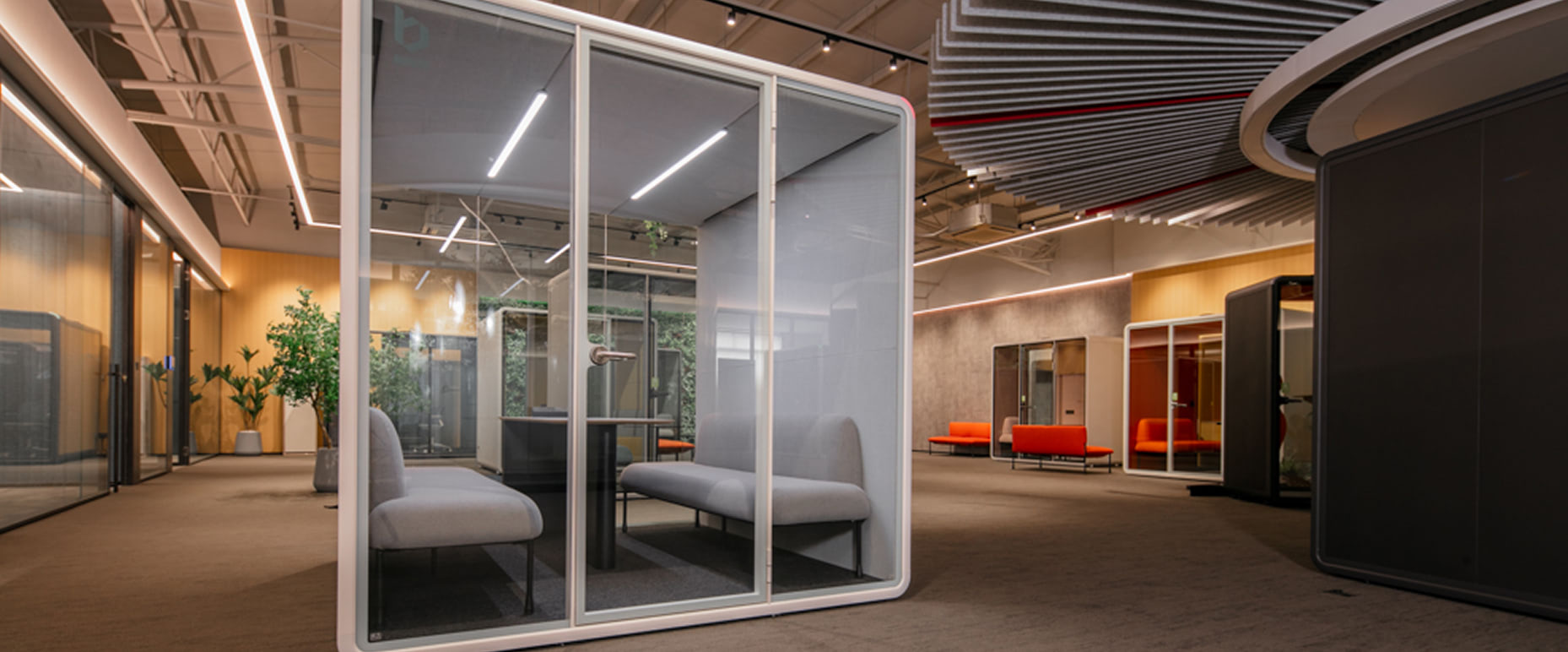
The Motif team imported Bureau's Revit and AutoCAD 3D models into a dedicated section of their workspace, where the design team can pull scaled, accurate product assets into any project. When a designer drops a Bureau booth into a client photo, they're starting from the real booth, in the right configuration, not an AI approximation.
This is what makes the difference between visualizations that win deals and visualizations that mislead them. A client looking at a Motif render of a Bureau booth in their office is seeing the actual product Bureau makes, in the configuration they'll receive.
A Design Tool Anyone on the Team Can Use
Bureau's longer-term vision is bigger than the design services team. Scot wants Motif in the hands of the salespeople, too: the people standing in client offices, hearing requests in real time, who today have to send those requests back to design services and wait.
"The goal is to get Motif built out in such a way that a completely non-technical person, like all of our salespeople, knows the pathway to be able to create the simple versions by logging in, doing it live, switching it, sending updated renders back, without having to bother us," Scot says. As Fernando adds: a salesperson on site with a client can take a quick photo, combine it with a product image, and "in two pictures it's done basically. You can get the result."
That shift, from a centralized design team that produces visuals on request to a distributed sales team that produces them in the moment, is exactly the kind of leverage Motif is designed to enable. And for Bureau, it lines up with how the company already thinks about design itself: pragmatic, accessible, fast, in service of the customer rather than a barrier to them.
The team's internal training has been measured in days, not weeks. "In one week or less," Fernando says, anyone on the team can be productive in Motif. "It's a very friendly app."
The Results
What Bureau Has Today
A few things the company is seeing now that it wasn't seeing before:
Standard renders cut from one hour to 20 minutes, and large multi-option presentations from 24 hours to a fraction of that.
A unified workspace that has replaced a stack of disconnected tools (Adobe, Blender, AutoCAD) with a single browser-based canvas anyone on the team can open.
Their own product catalog inside the tool, ensuring every visualization a client sees uses the actual Bureau product, in the configuration they'll receive.
A path to sales-team self-service, where the people closest to clients can produce client-ready visuals in the moment.
A pricing and onboarding experience that, after a previous tool consumed months and tens of thousands of dollars, was up and running in two weeks at a fraction of the monthly cost.
The Bigger Idea
Scot has spent his career thinking about how environment shapes performance. From building businesses across Colorado, Korea, Seattle, and Vancouver, to merging two competing booth companies into one global manufacturer, the through-line has been the same: the spaces we work in change the work we do.
Bureau exists because most offices ignore that. The open-plan became the only-plan. Focus became the rarest thing in the building. And the cost, that 23 minutes, that $12,000 a head, hides in plain sight on every floor of every office in every city.
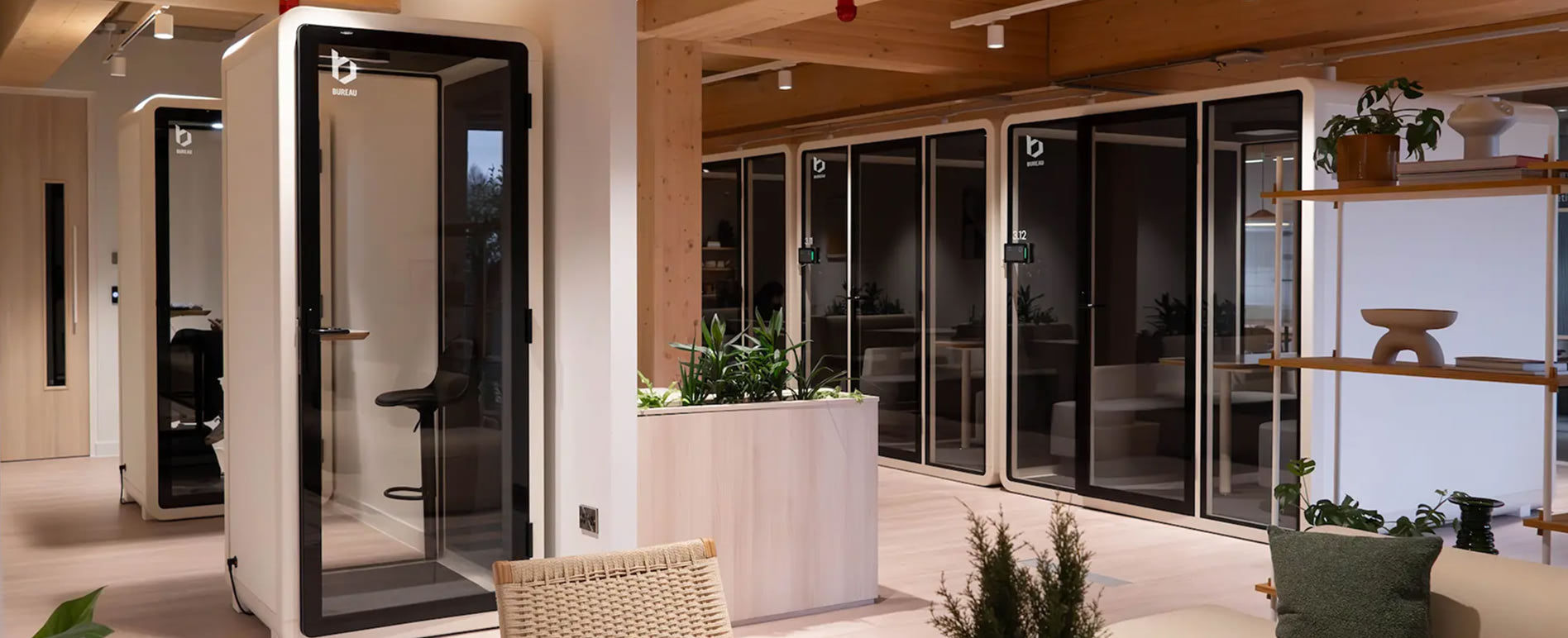
The booths are the answer to that. Each one is a small, soundproof room where the noise stops and the focused work starts. A Time Machine you can step into for an hour and walk out of with the day you thought you'd lost.
Bureau builds them, ships them, and installs them in two weeks. Motif helps Bureau show clients what that will look like before the first booth arrives.
Bureau sells time. Now the design team has a little more of it, too.
Bureau is a global manufacturer of soundproof modular rooms, phone booths, and modular office infrastructure. Founded in 2020, the company serves clients ranging from independent agencies to NASA, SpaceX, and WeWork, with offices across North America, the UK, and Australia.